
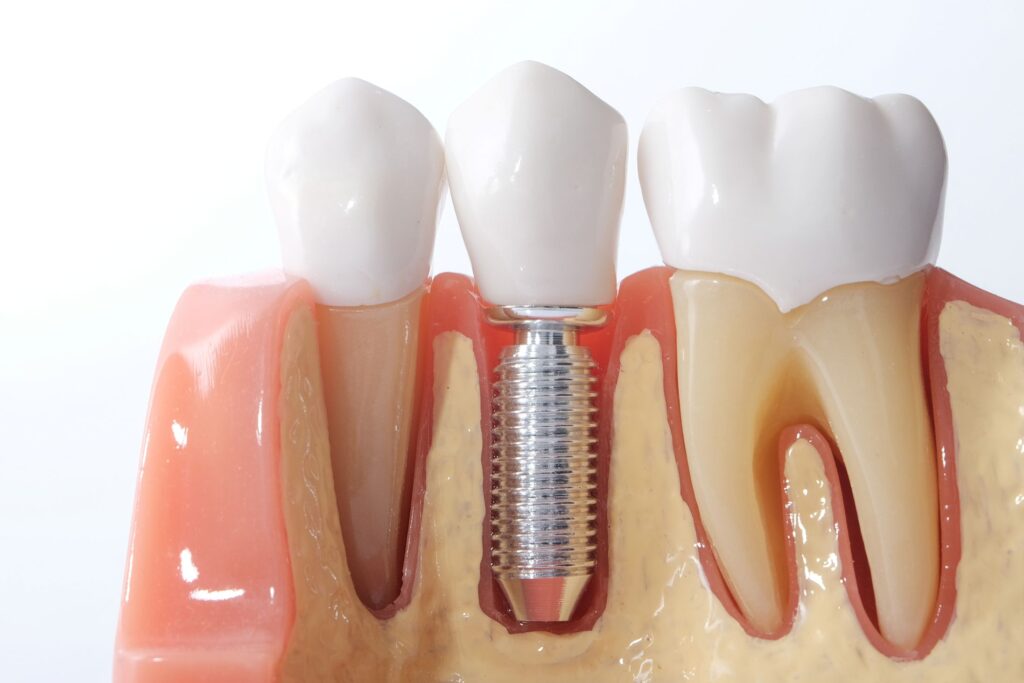
Gaps in your grin can make once-basic tasks, like eating, speaking, or smiling confidently, much more challenging. Those seeking a resilient, long-term solution might be good candidates for dental implants.
These are the only replacement teeth placed in your jaw, providing additional strength and stability compared to alternative solutions like dentures or bridges. But did you know the materials your restorations are made from can potentially impact their lifespan? Continue reading to learn more!
How do Dental Implants Work?
Before proceeding, you must consult your provider to determine that you’re a good candidate. They’ll examine your current dental condition and take X-rays to help determine whether your jaw is strong enough to support this treatment.
If everything checks out, the next step is scheduling your procedure, which involves oral surgery. To begin, your dentist will numb the area and/or sedate you to help you feel calm and comfortable. Then, they surgically place a support rod made from biocompatible materials into your jaw.
It can take 3 to 6 months to heal, because your mouth must produce enough new bone to fuse with this post in a process called osseointegration. Once you’ve mended sufficiently, your provider can make impressions to design a one-of-a-kind restoration that will anchor to your implant.
How Long Do Dental Implants Last?
Once osseointegration is complete, the rod of your implant is essentially a permanent part of your mouth and can potentially remain in good shape for the rest of your life. It’s capped with a lifelike dental crown, bridge, or dentures, depending on how many teeth went missing. These are usually made from resilient, tooth-colored ceramic, such as porcelain, that can last 25+ years if cared for correctly.
But different factors can potentially affect how long it will remain functional, including the different materials used to make your new tooth.
Do Different Materials Affect Dental Implant Longevity?
Like many other products, dental implants can be made with different materials that can potentially affect their lifespan. For example, titanium is the standard material used for the post and the connector piece, or abutment, that holds your restoration in place. This metal isn’t rejected by the human body and is both lightweight and resilient enough to withstand biting and chewing, making it ideal for dental implants.
But patients with certain metal sensitivities might opt for a new tooth made from zirconia, a tooth-colored ceramic that is less likely to cause an adverse reaction. However, it’s also slightly more brittle than titanium, which can increase the risk of chips, cracks, or other damage that might contribute to failure, especially in patients who frequently grind their teeth.
If you have questions about which options are best for you, your dentist can provide recommendations that take your unique circumstances into consideration!
Meet the Author
Dr. Bobby Carmen has more than 20 years of experience helping people of all ages improve their lives by enhancing their dental health. He earned his Doctor of Dental Surgery from the University of Oklahoma College of Dentistry, and today, he is a Master of the Academy of General Dentistry and also a Fellow of the International Congress of Oral Implantologists. He has completed specialized training and is equipped with state-of-the-art technology to place and restore dental implants in the office for a more comfortable, streamlined experience. You can request an appointment on the website or call (405) 364-2200.